

Image source unknown
Modern life places enormous pressure on our nervous systems.
Low-grade stress. Emotional fatigue. Mood fluctuations. Mental noise.
Many people searching for natural mood support eventually ask:
Is Kanna a “natural antidepressant”?
While Kanna is not a pharmaceutical and should not replace prescribed medication, it does have something fascinating in common with many conventional antidepressants:
It acts as a serotonin reuptake inhibitor (SRI).
Let’s dive into what that means.
What Is Kanna?
Kanna (Sceletium tortuosum) is a South African succulent traditionally used for:
Mood elevation
Stress reduction
Emotional openness
Social and relational ease
Modern research shows that Kanna’s active alkaloids — particularly mesembrine — interact with serotonin pathways in the brain.
This is where its reputation as “nature’s antidepressant” begins.
Kanna’s Pharmacology: How It Works
Kanna contains alkaloids such as:
Mesembrine
Mesembrenone
Mesembrenol
The most studied compound, mesembrine, functions as a serotonin reuptake inhibitor (SRI).
What Is Serotonin Reuptake?
After serotonin is released in the brain, it is normally reabsorbed (or “reuptaken”) back into the neuron.
An SRI works by:
Slowing down serotonin reuptake
Allowing serotonin to remain active in the synapse longer
Supporting improved mood stability
In simple terms:
More available serotonin, for longer = more stable emotional tone.
This mechanism is similar in category — though not identical in strength — to how many pharmaceutical antidepressants function.
SRI vs SSRI: What’s the Difference?
This is where nuance matters.
SSRI = Selective Serotonin Reuptake Inhibitor
Common SSRIs include:
Sertraline (Zoloft)
Fluoxetine (Prozac)
Escitalopram (Lexapro)
They are called selective because they primarily target serotonin transporters.
They are:
Highly potent
Standardized pharmaceuticals
Prescribed for clinical depression and anxiety disorders
SRI = Serotonin Reuptake Inhibitor
An SRI is a broader term.
Kanna is considered an SRI because:
It inhibits serotonin reuptake
But it is not a standardized pharmaceutical
It may have additional mechanisms beyond serotonin
Kanna’s action is generally described as:
Milder
Broader in effect
Multi-mechanistic (including PDE-4 inhibition in some extracts)
It is not classified as an SSRI, nor is it approved as a medical antidepressant in Canada.
Why People Call Kanna “Nature’s Antidepressant”
People use this phrase because Kanna often supports:
More stable mood
Reduced emotional reactivity
Increased emotional openness
Less mental overwhelm
Users frequently report:
“I feel steadier.”
“My mind is quieter.”
“I feel more okay being where I am.”
Unlike stimulants, Kanna does not force euphoria.
Unlike sedatives, it does not dull awareness.
It supports emotional regulation without numbing.
However, it is important to note that kanna is not a clinically approved anti-depressant.
Does Kanna Have the Side Effects of SSRIs?
Pharmaceutical SSRIs can come with potential side effects such as:
Emotional blunting
Libido changes
Gastrointestinal issues
Sleep disturbances
Withdrawal symptoms upon discontinuation
Kanna, as a plant-based SRI, is often described as:
Gentler
Shorter-acting
Without the same dependency profile
That said:
Kanna should never be combined with SSRIs or MAOIs
It should not be used as a substitute for prescribed treatment without medical supervision
Kanna is best understood as functional, plant-based mood support — not a pharmaceutical replacement.
Why Someone Might Use Kanna for Daily Mood Support
People often turn to Kanna when:
They feel emotionally and/or energetically flat but are not clinically depressed
They experience stress-related mood fluctuations
They want plant-based support
They want to avoid stimulant crashes
They seek emotional uplift without sedation
Kanna can be used:
Daily at low doses (“microdose”-like experience)
Situationally for stress
Socially for relational openness
Its effects are typically felt within 20–60 minutes, depending on format, and last anywhere for 20 minutes to 6 hours, depending on dosing method.
How Kanna Wellness Approaches Mood Support
At Kanna Wellness, we don’t position Kanna as a cure or medicine.
We see kanna it a daily support for these times.
Modern life is demanding. Overwhelm has become normalized. Emotional dysregulation is common.
We exist to make life feel:
Smoother
Softer
More human
Kanna supports:
Nervous system regulation
Mood steadiness
Cognitive clarity
Emotional availability
Clear mind. Open heart.
Important Safety Note
Kanna should not be combined with:
SSRIs
SNRIs
MAOIs
Other serotonin-modulating medications
Always consult a healthcare professional before combining kanna supplements with prescription medication.
Final Thoughts
Kanna is not a pharmaceutical antidepressant. But it is a plant with psychoactive properties — specifically as a serotonin reuptake inhibitor.
For many people, that translates into:
A steadier emotional baseline
Reduced overwhelm
Increased presence
In a world that pushes us toward numbness or overstimulation, Kanna offers something different: Regulated participation in your own life.
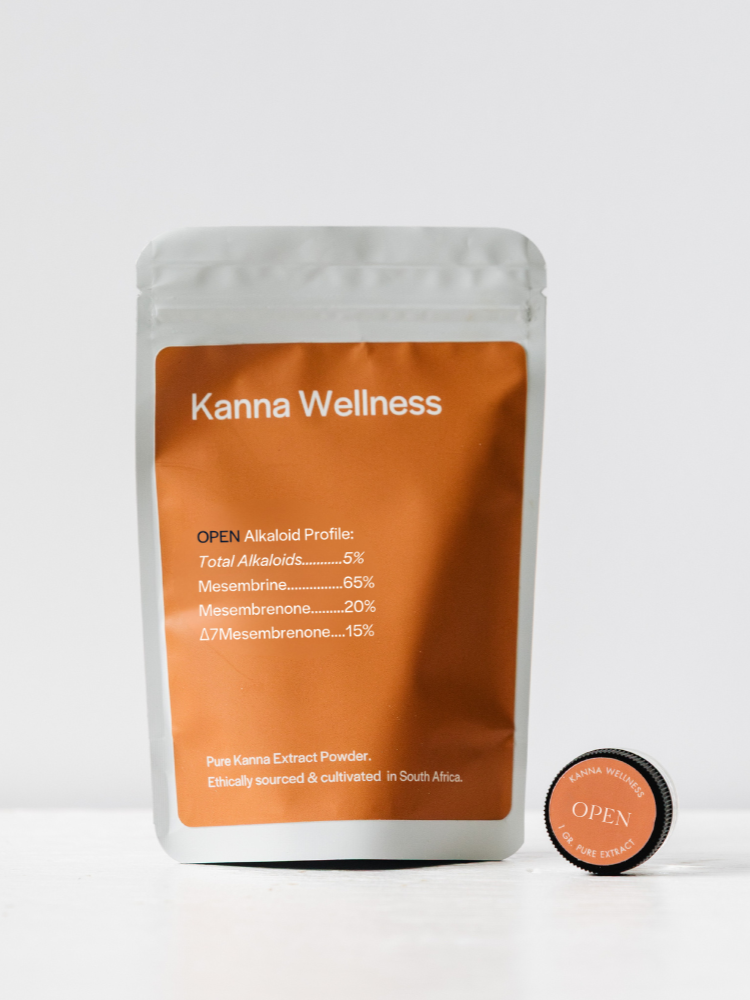

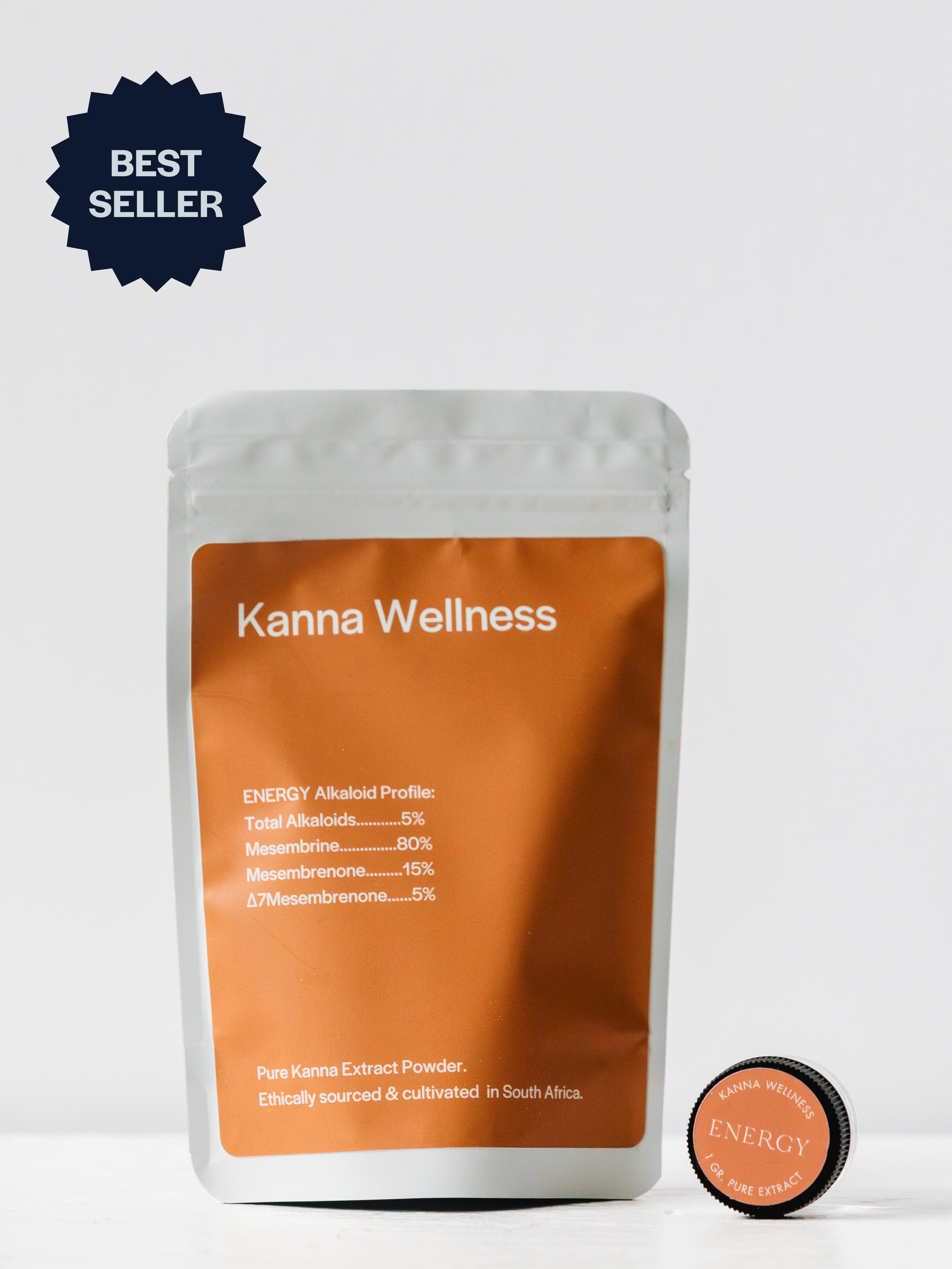
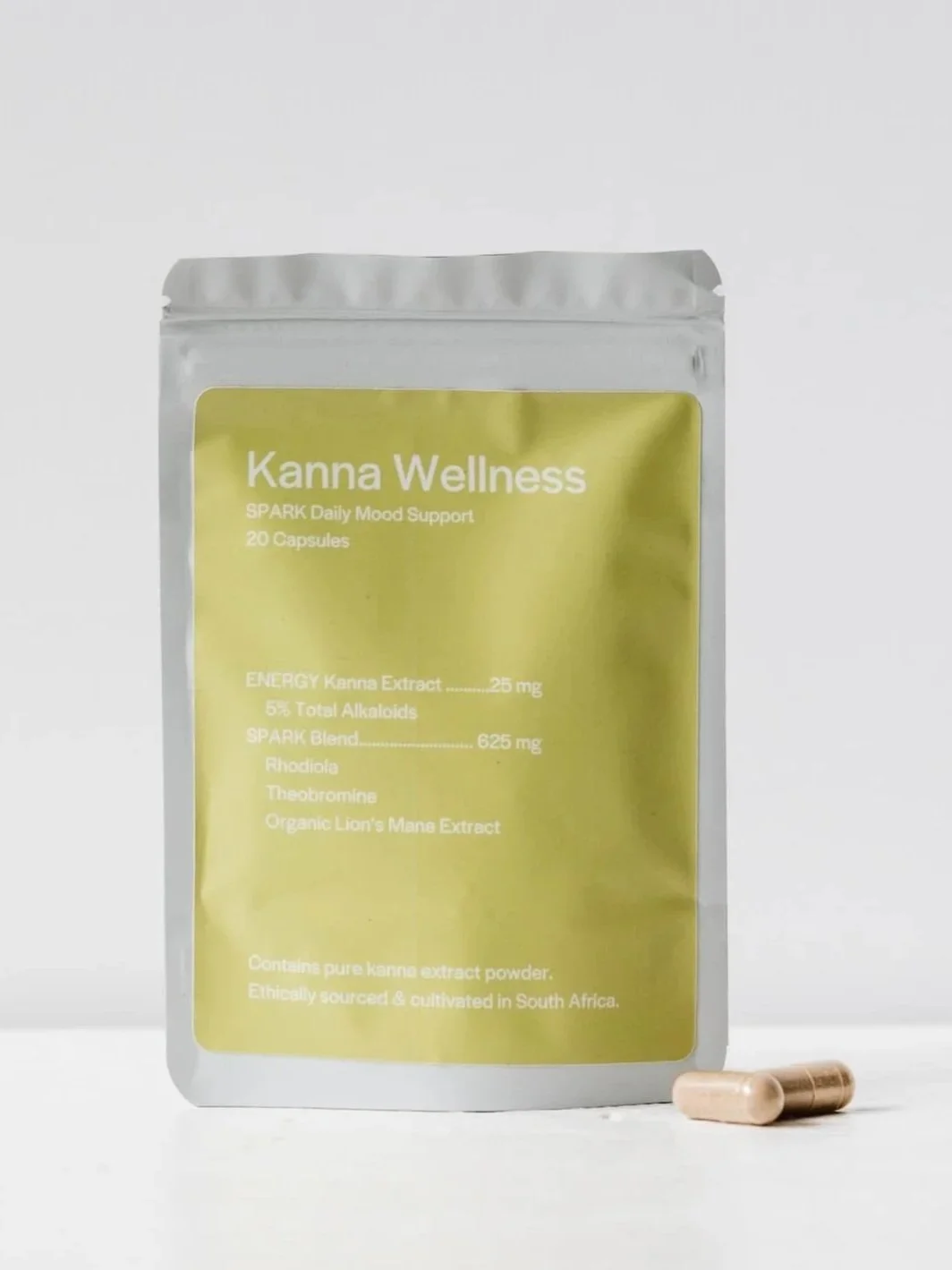


Felt Effects: Bright · Lifted · Clear
Buy Kanna in Canada – Canada’s Premium Liquid Kanna Tincture
ENERGY Kanna Drops in mint flavour are Kanna Wellness’ liquid kanna extract — fast-acting and built for life in motion. Four millilitres of kanna extract oil, suspended in organic vegetable glycerine, gives you 30 servings of approximately 25mg kanna.
Drop it under your tongue for fast sublingual onset, or add it to any drink. No scooping, no measuring, no mess. ENERGY Kanna Drops suit a moment: the event you're heading to, the airport you're passing through, the friend you want to share something with.
FELT EFFECTS
ENERGY Kanna Drops share the high-mesembrine alkaloid profile of ENERGY 18 — uplifting, clarifying, socially at ease — at a more moderate, accessible strength. The oil suspension supports fast absorption, particularly sublingually, meaning effects arrive sooner than with powder. The dose is calibrated for accessibility: pronounced enough to feel clearly, gentle enough to share.
BRIGHT — A clean mood lift that arrives quickly. Clear, not wired.
LIFTED — Sociable, motivated, verbally at ease. The room feels warmer.
CLEAR — Mental noise softens. You're here, and here feels good enough to give it your full attention.
USE CASES
Pre-event: a few drops before a night out, dancefloor, or social gathering
Travel: pocket-sized, glass vial, airline-safe — the most portable kanna format we carry
Add to mocktails, sparkling water, cacao, or coffee for a clear, social lift
Sharing with friends trying kanna for the first time — precise, easy to portion, fun to share
On-the-go days when a powder ritual isn't practical
Stacking with ENERGY or SPARK for a deeper experience
A first kanna experience for those who want something familiar and easy to use